

Advantages of Multi-Layered Water Tanks for Your Home
December 10, 2025From Start to Finish: How to Install Your Tank the Right Way
December 10, 2025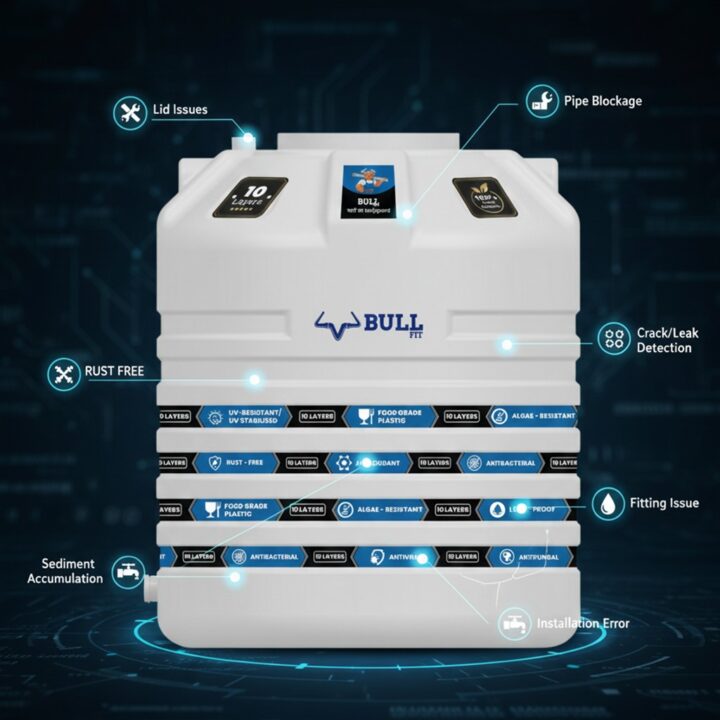
Fixing the 6 Most Common Tank Issues Made Easy
Fixing the 6 Most Common Tank Issues Made Easy
Water storage tanks are essential for both rural and urban homes, but problems like leaks, sediment buildup, algae growth, and contamination can threaten water quality and supply. Regular checks prevent small issues from turning serious. Bull Fit Tanks use a robust multi-layer (up to 10-layer) design for durable, UV-resistant water storage, reducing many problems at the source. Below are six common tank issues and easy fixes, with tips for homeowners, contractors, and builders alike.
- Leaks and Cracks
Leaks from pipes or cracks in the tank are very common. Inspect tanks and fittings monthly: even small drips indicate a problem. Follow these steps:
- Inspect for leaks – Check all joints and the tank walls for moisture or rust. Corrosion or loose fittings often cause leaks.
- Repair minor leaks – Tighten any loose pipe connectors or apply a waterproof sealant on small cracks. This typically stops drips before they worsen.
- Replace if needed – For large cracks or irreparable damage, replacement is safer than patching. A compromised tank can flood your foundation or cause big water loss.
Bull Fit’s high-grade PVC and solid fittings make leaks less likely. Their triple-layer tanks stand up to wear, and corrosion-resistant materials keep joints tight over time.
- Sediment and Scale Build-up
Hard water or debris can leave sand, rust, or mineral layers in the tank bottom. Sediment not only clogs pipes and pumps but also breeds bacteria. Fix this by:
- Flushing and Cleaning – Drain the tank completely and use a long-handled brush to scrub the walls and bottom. Power-wash or rinse repeatedly to remove all sand and sludge. In dusty or hard-water areas, do this cleaning at least once a year (or more often as needed).
- Disinfecting – After scrubbing, sanitize the tank by filling it with a diluted bleach solution or approved disinfectant for 30 minutes, then rinse thoroughly. This kills any hidden germs. Prince Pipes recommends using only mild, food-safe cleaners so no harmful residue remains.
Keeping the tank sediment-free improves pump efficiency and water taste. Bull Fit tanks are made from food-grade plastic that resists scale staining, making cleaning easier.
- Algae and Biofilm Growth
Algae thrive in warm, sunlit water. If algae appears, your tank has sunlight exposure or hasn’t been cleaned. To prevent it:
- Block Sunlight – Algae can’t grow without light. Always use an opaque, UV-stabilized cover. Bull Fit’s UV-shield lids block harmful rays, so sunlight can’t penetrate and fuel algae. Royal liner experts note that tanks in shade or with blocked light avoid algae blooms.
- Regular Cleaning – Even with a covered tank, some biofilm may form. When seen, drain and scrub the tank (as in the previous step) and disinfect. Monthly top-offs and yearly thorough cleans keep algae at bay.
An opaque Bull Fit tank with a tight, UV-blocking lid is your first defense: it “automatically eliminate[s] algae” by keeping sunlight out.
- Contamination (Dust, Insects, Debris)
Open vents or loose lids allow dirt, mosquitoes, or even small animals into the tank. To guard against contamination:
- Seal the Tank – Make sure all gaps are covered and vents are screened. Remove leaves and debris from the lid area regularly. Vectus advises checking tanks monthly to ensure they’re tightly sealed and clean on top.
- Monitor and Sanitize – If you see insects or dirt in the water, drain and sanitize the tank. Prince Pipes warns that keeping the lid and vents secure prevents bacteria and insect entry. After cleaning, closing the lid firmly and using fine mesh on vents will stop new contaminants.
Bull Fit Tanks come with threaded, airtight lids as standard. This helps block out dust and bugs so your water stays clean between cleanings.
- Cracks, UV Damage, and Structural Issues
Over time, plastic can warp or crack from UV exposure or shifting foundations. To catch problems early:
- Inspect for Cracks – Look around seams and bases for hairline cracks or brittleness, especially after hot summers. Bull pipes notes that UV rays eventually make plastics brittle. Fix small cracks with tank-safe patching, or consider replacing the unit if it is extensive.
- Professional Check – At least once a year, have a technician pressure-test pipes and valves. They can spot subtle issues like UV-induced brittleness or stress points. A pro will also test pumps, float valves, and filters to ensure the whole system is sound.
Bull Fit’s multi-layer design adds strength and UV stabilizer (premix) to resist weathering. When properly installed on a level base, these tanks stay plumb and last for decades.
- Low Pressure or Pump/Overflow Problems
Sometimes the tank is fine but water delivery is poor. This happens when the pump, float valve, or pipes are faulty:
- Check Float Valves and Pumps – If water isn’t refilling or pressure is weak, inspect the float valve and inlet. Clear any blockage and ensure the pump is primed and sized correctly. Debris can jam the float or filter, so clean them if needed.
- Maintain Water Levels – Constant under- or over-filling can strain the system. Prince Pipes advises installing a reliable float switch or sensor to keep water at a steady level. Also remove gutters or filters that might leak waste into the tank. Ensuring a stable supply and smooth float action prevents overflow and maintains pressure.
By following these tips and doing yearly maintenance (or whenever problems arise), even a rural tank or an urban rooftop cistern can run leak-free and germ-free. Bull Fit Tanks and fittings are designed to complement good practice – their leak-proof joints and UV-blocking lids give you an extra margin of safety. Implement these simple fixes, and you’ll keep every drop of water clean and under control.
