

Fixing the 6 Most Common Tank Issues Made Easy
December 10, 2025Why Plastic Tanks Outperform Traditional Storage Materials
February 20, 2026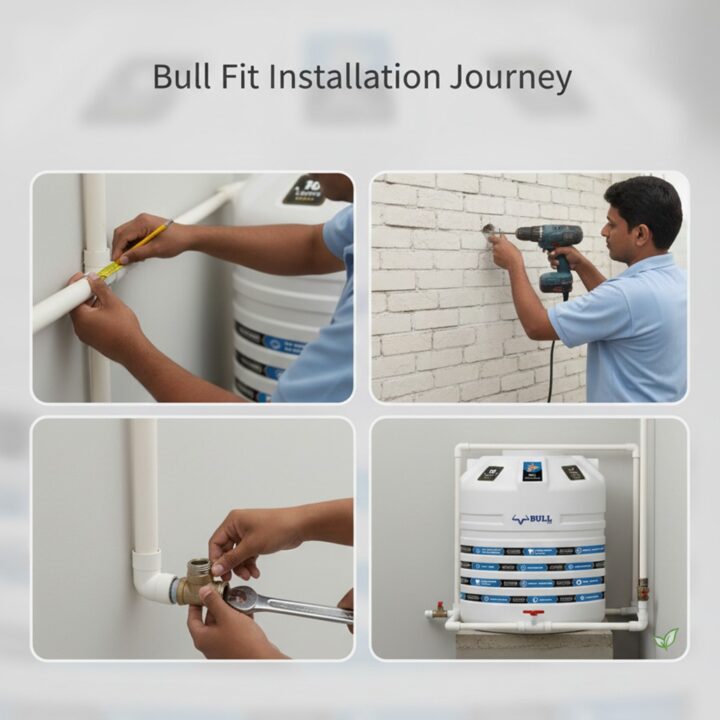
From Start to Finish: How to Install Your Tank the Right Way
From Start to Finish: How to Install Your Tank the Right Way
Installing a water tank correctly ensures clean water and long service life. First, choose the right tank and size for your needs. Estimate the volume you need – bigger isn’t always better, since an oversized tank can lead to stagnant water. Bull Pipes’ Bull Fit tanks, for example, come in a range of capacities (even big water tank capacities up to several thousand liters) so you can match your demand. These durable water storage tanks are made of UV-stabilized HDPE and often feature multi-layer designs. A 10-layer water tank (like Bull Fit’s 10-Layer series) uses UV-blocking outer layers and reflective coatings to keep stored water cool, plus inner antibacterial layers to maintain hygiene. Such UV-resistant water tanks resist heat and algae, making them suitable for extreme climates – for instance, in Jammu’s hot summers and cold winters, a tank built for extreme weather conditions will protect your water supply. In short, pick a plastic tank that’s food-grade, corrosion-free, and sized to your usage (agricultural or home).
Prepare a Solid Base
Your tank must sit on a flat, sturdy foundation. Clear and level the spot – it should be strong enough to support the full tank (often a concrete pad or pedestal). A level base is fundamental for structural integrity. Avoid hazards, and place the tank close to where the water pump or supply line will reach easily. For extra stability, some brands even recommend pre-made bases (e.g. a “T-base”) that extend beyond the tank edges to prevent slipping or erosion. In any case, ensure the base extends a few inches beyond the tank perimeter and is perfectly level. This prevents stress on the tank walls and avoids cracks or leaks over time.
Install the Tank and Connections
With the base ready, lift the tank (empty!) onto it carefully. Check it sits square and level. Now connect the plumbing: cut holes or fittings for the inlet (feed) and outlet (to taps) as per the manufacturer’s guidelines. Follow the instructions closely – proper seals and cuts will prevent leaks. Next, connect the tank to your water supply and a pump if needed. Attach a heavy-duty motor or pump to fill the tank, and fit any valves, float valves or gauges as required. For example, you’ll typically have a main inlet pipe (from the pump or town water) and an overflow outlet. Always thread and seal pipe joints properly. Once connected, run water in and check every joint for leaks before filling fully. A smooth installation here means years of trouble-free use.
- Pro Tip: Install an overflow outlet so excess water drains safely away. Keep the tank lid secured to avoid contamination.
Use and Maintain Your Tank
Using the tank is straightforward: pump or fill it with water, then draw water from the outlet or taps as needed. For safe, long-lasting performance, maintain it regularly. Inspect the tank periodically for cracks, leaks or damage. Clean out sediment or algae every few months, and sanitize if needed. A quality durable water storage tank (like a Bull Fit 10-layer tank) is designed to resist UV degradation and bacterial growth, but routine cleaning ensures fresh water. Keep lids closed and screens intact to keep out insects and debris. In summary: pump water in, use clean water out, and check the tank now and then.
By following these steps, homeowners, plumbers, and contractors can install any water tank “the right way.” Tanks like Bull Pipes’ Bull Fit series already incorporate many of these best practices – multi-layer UV protection, food-grade inner linings, and sturdy construction. Whether for home or farm (“agri water tanks”), the right installation and tank choice will give you reliable water storage even in extreme weather.
